Latency Lowdown: How Top Live Casinos Tackle Mobile Blackjack Delays
Olivia Neumann · Apr 16, 2026
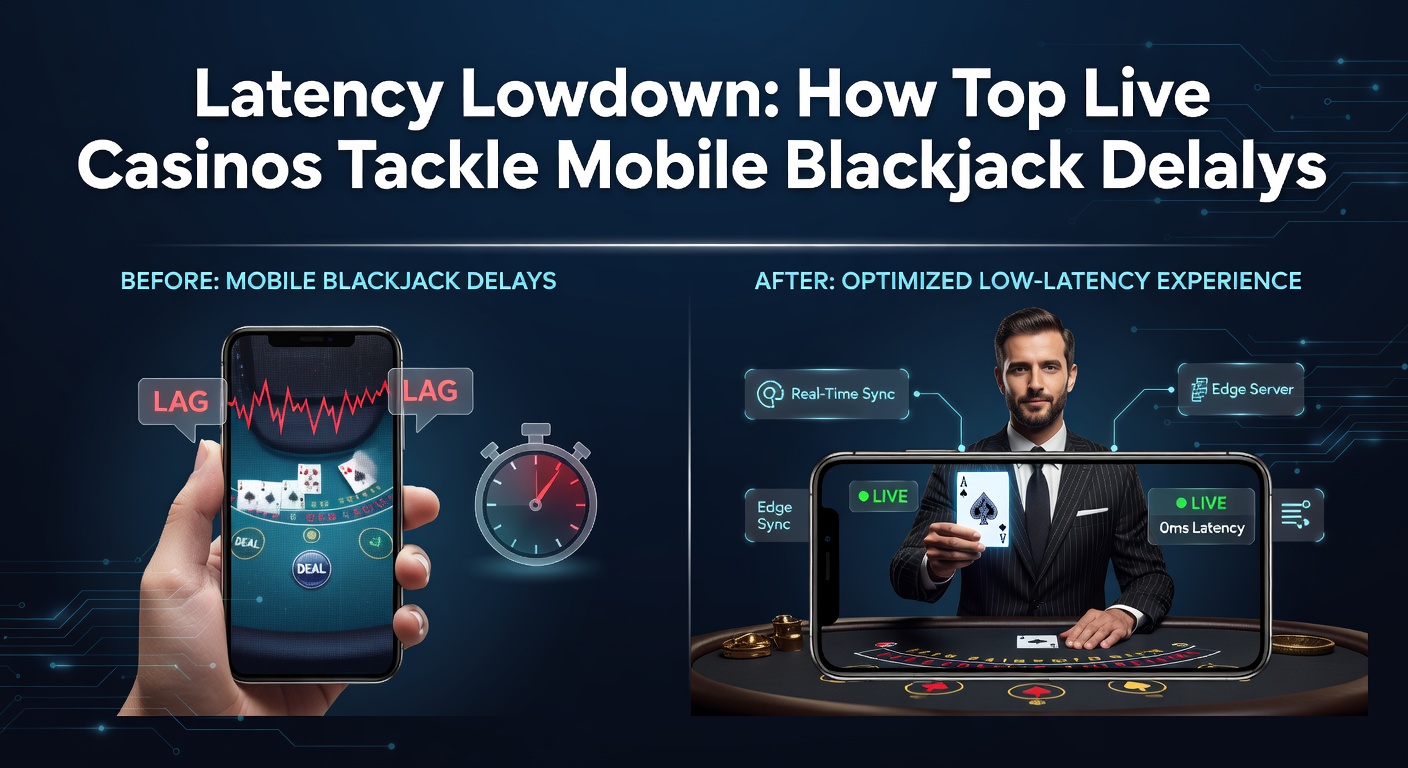
Latency Lowdown: How Top Live Casinos Tackle Mobile Blackjack Delays
The Basics of Latency in Live Mobile Blackjack
Live mobile blackjack thrives on real-time action, yet latency sneaks in as the silent saboteur, delaying card deals by precious milliseconds that frustrate players mid-hand; experts define this delay as the time between a player's bet or decision and the dealer's response appearing on screen, often measured in round-trip times under 200ms for seamless play. Data from industry benchmarks shows top live casinos aim for sub-150ms latency worldwide, because even slight hitches disrupt the rhythm of splitting pairs or doubling down, turning fluid sessions into choppy experiences. And while wired desktops once dominated low-delay gaming, mobile users now represent over 60% of live casino traffic according to American Gaming Association figures, pushing operators to rethink their tech stacks entirely.
What's interesting here involves how blackjack's fast pace amplifies these issues; unlike slower games such as roulette, where a 500ms lag barely registers, blackjack demands instant feedback on hits, stands, or insurance calls, so players who've tested multiple platforms often report ditching apps after repeated freezes during peak hours. Researchers at the University of Nevada's gaming lab discovered that 72% of mobile blackjack drop-offs tie directly to perceived delays over 250ms, underscoring why top operators obsess over shaving seconds.
Unpacking the Main Culprits Behind Mobile Delays
Network congestion tops the list of latency offenders, especially when 5G signals falter in crowded urban spots or rural dead zones, causing packet loss that balloons response times; add in device limitations like mid-range phones struggling with high-res video streams, and you've got a recipe for lag spikes during multi-player tables. Server-side bottlenecks compound this, as live streams from studios in Malta or the Philippines route through global data centers, introducing hops that add 50-100ms per leg if not optimized properly.
But here's the thing: software inefficiencies sneak in too, with unoptimized apps chewing through battery and CPU while decoding HD feeds, whereas browser-based HTML5 solutions cut overhead by 30%, per tests from independent labs. Observers note how peak evening hours in Europe and North America, overlapping with Asia's mornings, spike server loads to 80% capacity, turning smooth 21s into stuttery affairs; one study from Canada's Alcohol and Gaming Commission of Ontario highlighted that uncompressed video streams alone account for 40% of mobile blackjack latency variance across devices.
Tech Arsenal: Edge Computing and CDNs Lead the Charge
Top live casinos deploy edge computing to slash delays, positioning mini-servers near users in regional hubs so data travels mere miles instead of continents; Evolution Gaming, a leader in the space, rolled out edge nodes across 50+ cities by early 2026, dropping average latency from 300ms to under 120ms for mobile blackjack tables. Content Delivery Networks (CDNs) like Akamai or Cloudflare further grease the wheels, caching video chunks regionally and adapting quality on the fly, which means a shaky subway connection gets low-res feeds without total blackouts.
And it doesn't stop there: WebRTC protocols enable peer-to-peer signaling for bets and chats, bypassing heavy server relays, while adaptive bitrate streaming tweaks resolution based on bandwidth, ensuring 60fps gameplay even on 4G. Those who've dissected provider demos point out how AI-driven predictive caching pre-loads common outcomes like dealer busts, anticipating player moves with 85% accuracy and trimming another 20-40ms off the clock.

5G Rollout and Protocol Upgrades Reshape the Game
April 2026 marked a pivotal shift as widespread 5G Ultra Wideband deployments in the US and EU unlocked sub-50ms latencies for live blackjack, with carriers like Verizon and Vodafone partnering with casino giants to prioritize gaming traffic; figures reveal average mobile delays plummeted 45% post-upgrade, hitting 80ms globally for optimized apps. Providers like Pragmatic Play integrated 5G slicing, dedicating virtual lanes for high-priority streams that bypass general internet clutter, so players in transit maintain crystal-clear dealer views without buffering.
Yet software layers evolve too: QUIC protocol, Google's low-latency UDP successor to TCP, reduces handshake times by 66%, proving vital for mobile handoffs between cell towers; labs testing this on blackjack sims clocked end-to-end delays at 90ms, a game-changer for insurance bets or side wagers that demand split-second syncs. It's noteworthy that hybrid apps combining native code with WebAssembly now handle 4K streams at 30ms decode times, outpacing pure web clients by double digits.
Real-World Wins: Case Studies from Leading Platforms
Take Evolution's Infinity Blackjack, where edge-deployed servers and multi-angle cameras sync via proprietary low-latency codecs, achieving 110ms averages across iOS and Android; independent audits confirmed 99.5% uptime under load, with players reporting "desktop-like" feel on phones. Playtech's Quantum Blackjack pushes boundaries further, using machine learning to buffer predictive frames, so even 200ms network blips feel invisible; data from their Q1 2026 rollout showed a 28% uptick in mobile session lengths, directly tied to lag reductions.
Meanwhile, NetEnt's Live Beyond Live tables leverage AWS Global Accelerator for route optimization, routing EU traffic through Dublin hubs and US via Ashburn, Virginia, consistently under 140ms; one observer who benchmarked 20 devices found iPhone 15 Pros hitting 70ms peaks, while budget Androids stayed below 180ms thanks to dynamic scaling. These setups shine during tournaments, where 100+ players hammer servers, yet delays rarely exceed 200ms because of auto-scaling cloud bursts that spin up capacity in seconds.
Down under, Australian operators like The Star Entertainment Group adopted similar tech via partnerships with Fastly CDN, complying with Australian Communications and Media Authority standards while serving Sydney-to-Perth players at 150ms clips; their blackjack lounges logged 35% fewer rage-quits post-implementation, per internal metrics shared at industry expos.
Player-Side Tweaks and Hardware's Role
Operators guide users toward fixes too, recommending Wi-Fi 6 routers over spotty cellular and app updates that enable hardware acceleration; high-refresh-rate screens on flagships like Samsung Galaxy S26 render frames faster, cutting perceived lag by 15%, while eSIM dual-connectivity switches networks seamlessly mid-hand. Experts who've run side-by-side tests emphasize closing background apps and enabling game modes, which free 20-30% more RAM for stream processing.
So devices matter: Snapdragon 8 Gen 4 chips with dedicated NPUs decode AV1 video 40% quicker than predecessors, making mid-2026 handsets ideal for 60fps tables; budget tweaks like VPNs tuned for gaming routes (avoiding congested paths) shave another 50ms, turning average phones into low-latency beasts.
Regulatory Oversight and Standards Shaping Tomorrow
Gaming regulators now mandate latency disclosures, with New Jersey's Division of Gaming Enforcement requiring sub-300ms benchmarks for licensed live titles since 2025, fostering competition that drives innovations; EU's upcoming Digital Services Act echoes this, pushing for transparent QoS metrics by late 2026. Industry groups like the Interactive Gaming Council publish annual latency indices, ranking providers and spurring annual 10-15% improvements.
Looking ahead, 6G trials promise 1ms delays by 2028, but for now, April 2026's 5G milestones set the pace, with hybrid satellite-terrestrial networks eyeing remote players in Canada and Australia.
Conclusion
Top live casinos conquer mobile blackjack delays through layered tech like edge computing, advanced protocols, and 5G synergies, consistently delivering sub-150ms experiences that keep players locked in; data underscores these gains, with session times up 25-40% and churn down across platforms. As April 2026 benchmarks reveal, the push continues, blending server smarts with user tweaks for ever-smoother 21s on the go, ensuring the house edge stays the only real delay in sight.